
Compare
Concrete vs Asphalt Driveway in Southeast Wisconsin
Nobody is really asking which material is better. They are asking which is better for their driveway. So here are seven situations and a straight answer to each - three of which point at asphalt.
We pour concrete. Knowing that, you should read a general comparison from us with some suspicion, which is why this one is broken into specific circumstances instead. It is harder to fudge a recommendation when the question is narrow.
The price gap, for reference
HomeGuide sets the two side by side: asphalt $5 to $12 a square foot fitted, concrete $6 to $15.
National figures, published by them. Asphalt is cheaper on day one and the difference grows with the size of the driveway. Keep that in mind as a thumb on the scale rather than a decision, since several of the situations below outweigh it.
1. You have a long rural drive
Asphalt. The per-foot saving compounds across a couple of hundred feet into money that is genuinely worth having, and the appearance argument for concrete carries much less weight where nobody stands and looks at it.
2. Your ground is known to move
Asphalt. This is a real engineering point rather than a consolation. Asphalt is a flexible pavement: when the subgrade lifts and settles through a freeze cycle, it deforms and goes along with it. Concrete is rigid and answers the same movement by cracking. If a previous driveway on the plot has failed through heave, that history is telling you something.
3. You want it usable this week
Asphalt. It is trafficable within a couple of days. Concrete asks for seven before a car goes on it, and that week is not negotiable at any price.
4. The driveway runs up a grade
Concrete. A broom-finished surface gives better footing on a slope than smooth blacktop, and it does not soften in a July sun the way a dark surface facing south will.
5. You park a trailer, a camper or anything on jacks
Concrete. Point loads sink into warm asphalt. Trailer tongue jacks, motorcycle kickstands and camper levelling blocks all leave their mark, and it does not come back out.
6. You expect to be here twenty years
Concrete, with a condition attached. Built correctly it substantially outlasts asphalt, and it does not carry the recurring sealcoating cycle that asphalt needs to stay sound. The condition is that all of the "built correctly" applies, which is the subject of the last section on this page.
7. The appearance matters to you
Concrete. Broom, exposed aggregate, integral colour, stamped, bordered. Asphalt offers black, then a faded version of black. Whether that returns money at resale depends on your street, and we would not promise otherwise.
Not sure which suits your site?
Four quick questions and a local concrete contractor will be in touch to set up a free on-site estimate. If your ground or your budget points at asphalt, we will tell you so.
The one where asphalt has a clear edge and it matters here
Road salt. Deicing chemicals scale concrete surfaces by holding water at the top of the slab and driving it through more freeze cycles than it would otherwise see. Asphalt is largely untroubled by them.
That is a genuine mark against concrete in a state that salts heavily. It is manageable - air entrainment specified for the duty, a first winter with nothing but grit, and periodic sealing afterwards - but it is management, and asphalt does not ask for it. The trade runs the other way on petroleum: a leaking vehicle stains concrete and dissolves asphalt binder.
What actually decides it, more often than the material
Nearly every failed driveway we are called to look at failed from below. The frost cycle here works on whatever sits beneath the surface, and it finds thin stone, poor compaction and standing water regardless of what was poured or paved on top.
Which produces the only rule on this page worth memorising. If your budget covers concrete properly built - dug out to depth, granular base rolled in layers, air content ordered for a surface that will meet salt, a joint layout drawn up before the truck arrives, and the approach at the street to whatever your municipality specifies - then concrete is the better twenty-year purchase. If the budget only reaches concrete by cutting into that list, asphalt built well is the better driveway, and we would rather say so than sell you a thin slab.
For what the concrete option costs locally, including the approach permit, concrete driveway cost in Oak Creek has the detail. If you are taking out an existing surface first, replacing a concrete driveway prices that stage by stage.
If you land on concrete, mind the first winter
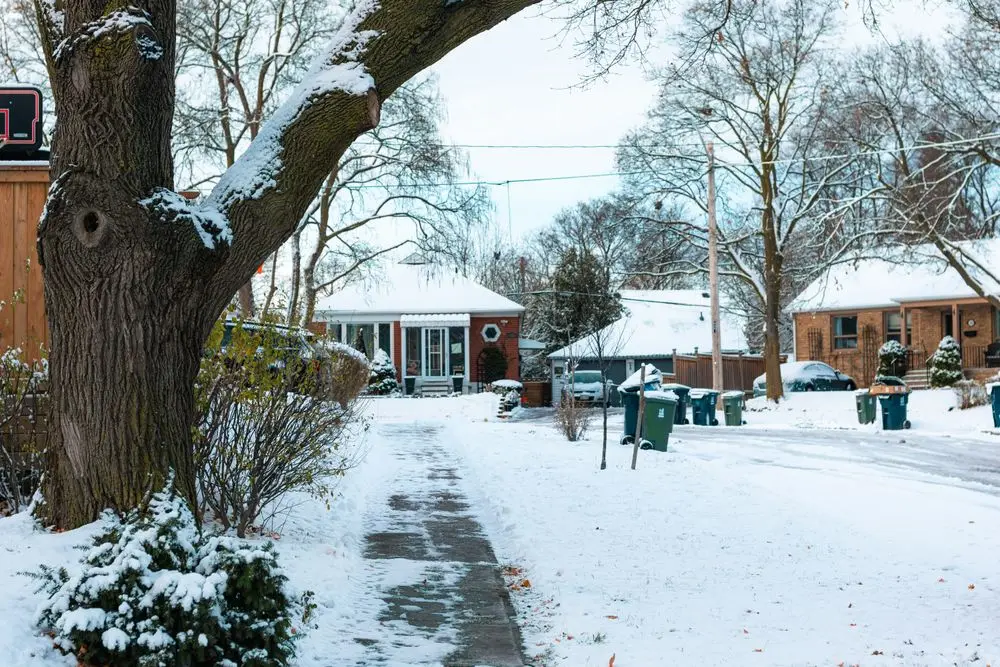
Since salt is the one place asphalt wins outright, this is the aftercare that matters most. Put no chemical product on a new slab during its opening season. It is still saturated and has not yet reached the strength to be frozen in that state, and deicers worsen both conditions at once.
Do not accept the common substitution of magnesium or calcium chloride as the kinder choice. Wisconsin's ready mixed association names both among the products to keep off concrete, and in Oregon DOT's comparative work magnesium chloride produced the greatest loss of compressive strength of the chlorides tested. Sand or grit gives you traction and costs the slab nothing.
Sources
- HomeGuide - asphalt against concrete, installed cost per square foot. Verified 2026-08-17.
- Wisconsin Ready Mixed Concrete Association - driveway care and deicer exclusions.
- NRMCA CIP 2 - scaling, deicers and the freeze-thaw mechanism.
- Oregon DOT SPR 742 - comparative chloride deicer strength loss.