
Cost
Concrete Patio Cost in Milwaukee County
Most patio budgets are decided by the finish, not the slab. Here is the published ladder from plain to decorative, and what the Wisconsin winter adds underneath all of it.
Two patios of identical size can differ in price by a factor of two, and almost none of that difference is in the concrete. It is in what gets done to the surface before it sets. So the useful way into this is the finish ladder rather than a single average.
The published ladder, rung by rung
ConcreteNetwork sorts patio pricing into bands set by the amount of decorative treatment in play:
- $5 to $8 a square foot where there is no colour and no decorative work
- $8 to $11 once a single colouring method comes into it
- $11 to $18 where two or three colours are used, or a contrasting border runs round the edge
- Higher again for intricate design work
HomeGuide draws the line in one place rather than three: plain concrete at $4 to $12 installed per square foot, stained or stamped at $8 to $30.
Both are national datasets published by others. What they establish is that the finish choice, not the square footage, is usually the biggest single lever you control.
What those bands leave out in Wisconsin
Every figure above is an average across a country where most of the population never watches water freeze inside a slab. Strip out the frost states and you strip out the reason our patios cost what they do.
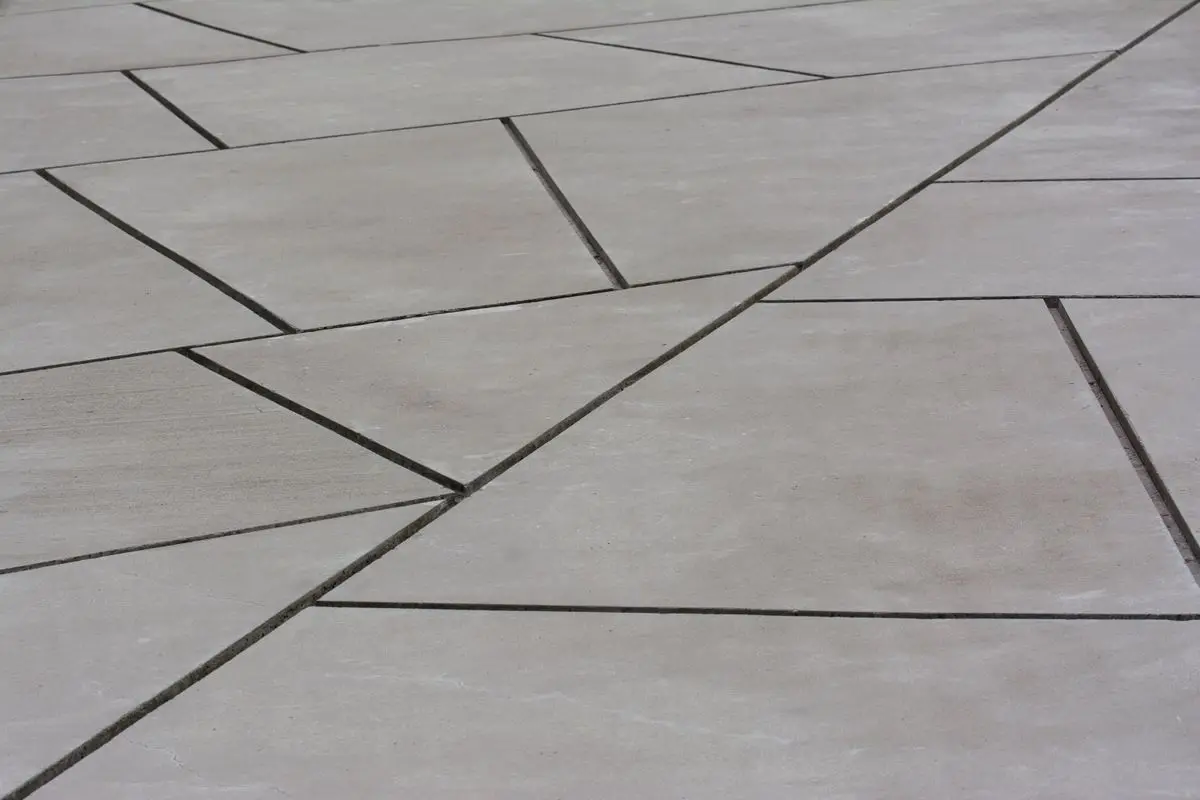
Here the surface has to tolerate repeated freezing, which means air deliberately introduced into the mix so expanding water has somewhere to go. It means stone underneath, consolidated properly, because ground that heaves will find any weakness in preparation. And it means joints planned in advance rather than sawn wherever looked convenient afterwards.
None of that shows in a photograph of a finished patio, which is exactly why the cheapest bid so often looks identical to the dearest one on the day it is poured.
Choosing a finish honestly
Broom finish
The bottom rung, and the one we pour most. Textured enough to be safe wet, essentially maintenance free, and it ages without looking like it is failing. If the patio's job is to hold furniture and a grill, this is the sensible buy.
Exposed aggregate
The surface is washed back to reveal the stone in the mix. More visual interest than a broom finish, excellent grip, and no colour to fade. It sits comfortably in the middle band.
Coloured or single-technique work
One integral colour or a single decorative treatment. A real step up in appearance for a modest step up in cost, and it introduces a sealer to the equation.
Stamped and multi-colour
Top of the ladder. Worth it when the patio is the feature of the garden and you actively want the look. Understand what you are accepting: the finish depends on a sealer, the sealer wears, and renewing it is a recurring job for as long as you own the house. That is a fair trade if you want the appearance, and a poor one if someone sold it to you as more durable. It is not.
Get a real number for your patio
Four quick questions and a local concrete contractor will be in touch to set up a free on-site estimate. "Just pricing it out" is a perfectly good answer.
The other things that move your number
Whether anything has to come out first. An existing patio means breaking, lifting and paying by weight to dispose of it, all before the new work starts.
How the concrete reaches the back garden. Front-of-house pours are cheap to service. A patio behind the house, through a gate or up a grade, means the mix is barrowed or pumped, and that is priced in labour hours.
Scale, working in your favour. Larger patios cost less per square foot - ConcreteNetwork says as much directly - because the truck, the crew and the setup cost the same whether the pour is small or large.
What the plant is asked for. Air content around four to seven percent of volume is what carries a surface through freeze-thaw. A patio that will meet salt is a harsher case and should be specified as one.
Worth asking every contractor bidding
- Which decorative band is this quote actually in, and what does the next one up cost?
- If it is stamped, what sealer, and how often will I be resealing it?
- How much stone underneath, and how many passes of compaction?
- What air content are you ordering for this pour?
- Where will the joints fall, and is removal of the old slab in this price?
Footings are not part of this conversation
The state sets footing depth at 48 inches under grade, or lower still where frost reaches further down, and it is that second half of the rule which tends to vanish when the number gets repeated online. Either way it is a rule about structures.
Your patio is not a structure. It sits on grade and moves with the ground, which is why it wants good stone and planned joints instead of piers. A bid that prices deep footings into a plain patio has either misunderstood the job or is padding it.
The first winter, and the mistake nearly everyone makes
Put nothing on it. Not the first year. Fresh concrete is still saturated and has not yet built the strength to be frozen in that condition, and every deicing product available works by holding water at the surface and increasing how often it freezes.
The advice you will find almost everywhere is to use magnesium or calcium chloride as the gentle option. That guidance is wrong. Wisconsin's ready mixed association excludes both by name, and when the Oregon transportation department measured chlorides against compressive strength loss, magnesium chloride performed worst of those tested. Sand or grit gives you footing and leaves the slab alone.
Leave sealing until the concrete has had a month to dry, then revisit it every few seasons.
Once you have a band in mind, our concrete patio page covers what the job itself looks like, from marking the footprint out on the grass to the finish you end up standing on.
Sources
- ConcreteNetwork - patio cost by decorative tier, and price per square foot falling with size. Verified 2026-08-17.
- HomeGuide - plain against stained or stamped per square foot. Verified 2026-08-17.
- Wis. Admin. Code SPS 321.16 - footing depth, "whichever is deeper".
- Wisconsin Ready Mixed Concrete Association - deicer exclusions and flatwork care.
- Oregon DOT SPR 742 - chloride deicers and compressive strength.